Precision Parts,
Built to Spec.
Functional prototypes, production runs of 10–500 units, and reverse-engineered replacement parts — delivered with engineering-grade rigor and the communication your project deserves.
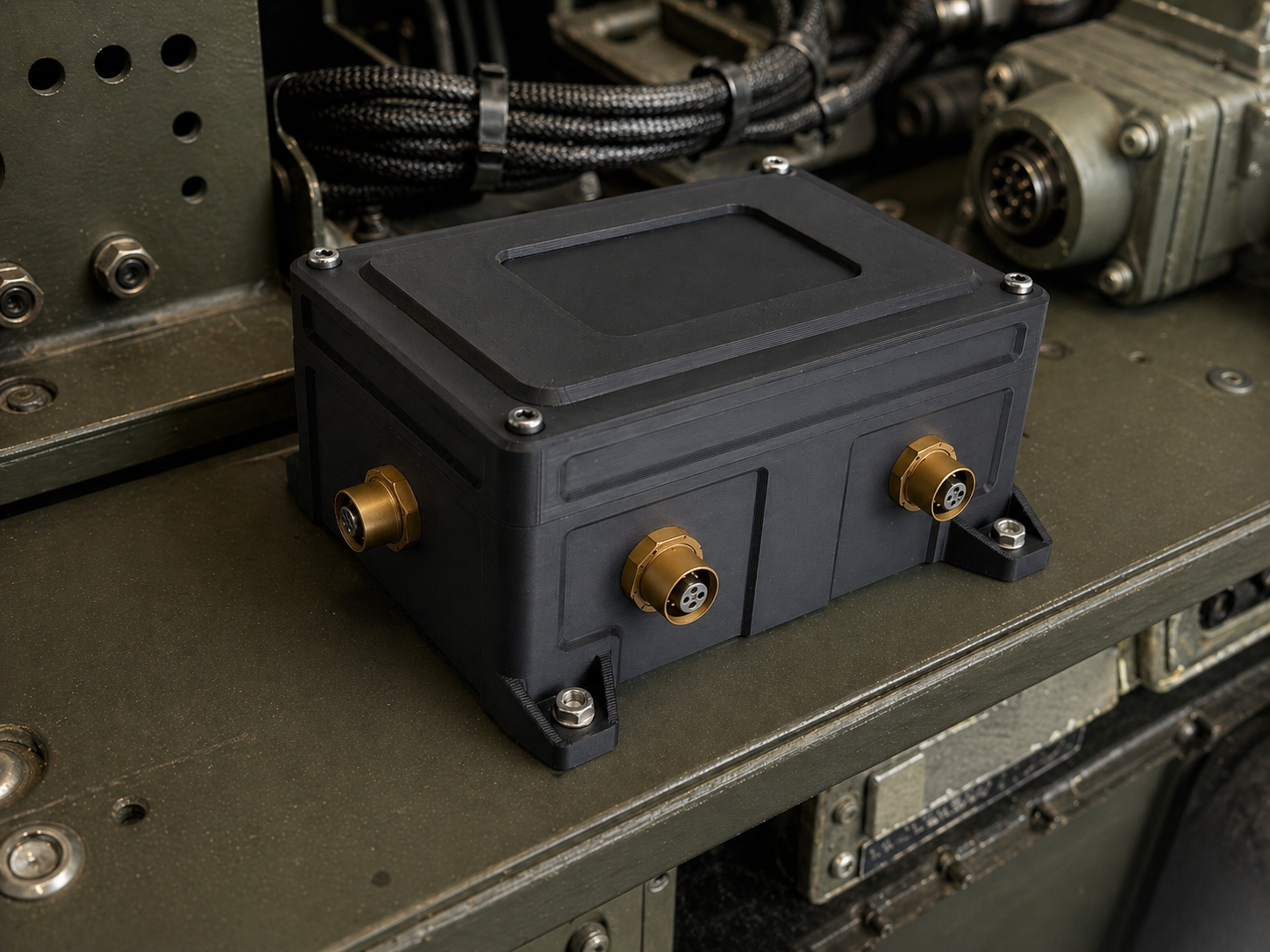
Three ways we can help your project.
Whether you need a single prototype or a short production run, every order gets the same disciplined process.
Functional Prototypes
Take your design from digital to physical. We produce parts built to your specification — material, tolerance, and finish — so you can test, iterate, and validate before committing to tooling.
Production Runs
10 to 500 units, consistently. Each piece in a batch is held to the same standard. Material lots are tracked, nonconformances are documented, and inspection records are available on request.
Replacement Parts
Legacy hardware, discontinued components, broken fixtures — if you can describe it or send us a sample, we can reverse-engineer a functional replacement. We work from physical references, drawings, or both.
Engineering rigor behind every print.
We operate with the documentation and inspection practices you'd expect from a contract manufacturer — applied to additive manufacturing.
Calibrated Process
Equipment is calibrated regularly and dimensional results are verified with calibrated instruments. Tolerances are stated upfront; deviations are documented, never quietly shipped.
Material Traceability
Every material spool is logged by lot number. Production runs carry full traceability records. If a batch issue is identified, we can tell you exactly which orders may be affected.
Documented Quality
First Article Inspection (FAI) reports are available on request. Nonconformances are recorded rather than ignored. We tell you when something is off — and fix it before delivery.
Direct Communication
You talk to the engineer, not a sales layer. Questions about material selection, geometry, or tolerances get real answers. DFM feedback is offered proactively when we see a concern.
Here's how a typical order works.
No prior experience necessary. We'll guide you through every step and make sure you know exactly what you're getting before we start printing.
Describe Your Part
Fill out our quote form with whatever you have — a file, a sketch, rough dimensions, or just a description. There's no wrong way to start.
Review Your Quote
Within 1 business day: price, lead time, material recommendation, and any design feedback if we spot a potential issue.
Parts in Production
Once approved, your parts enter the queue. Standard lead time is 5–10 business days. Expedited options are available if you're on a deadline.
Delivered to You
Parts are inspected, packaged, and shipped with any requested documentation. We follow up to make sure everything meets your expectations.
Parts we've designed and built.
From electronics enclosures to structural brackets — real parts, produced to spec.
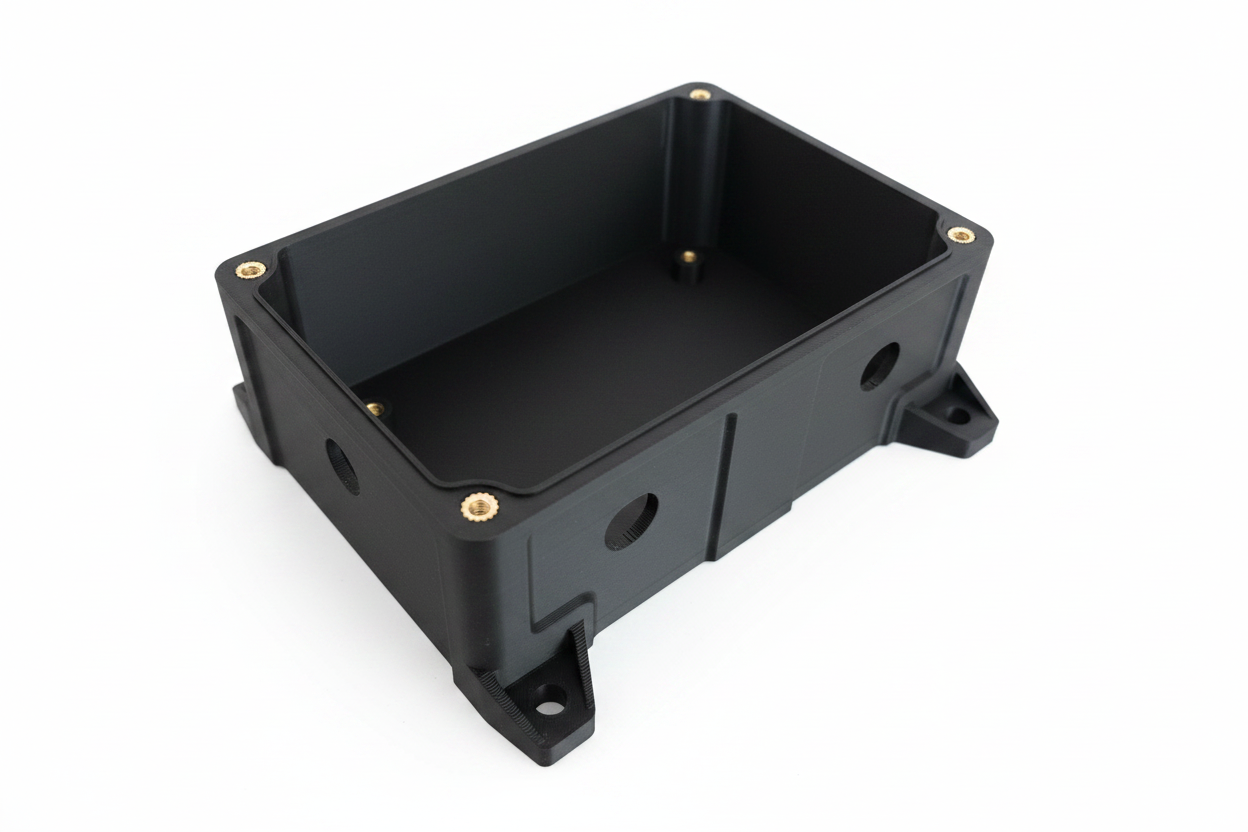
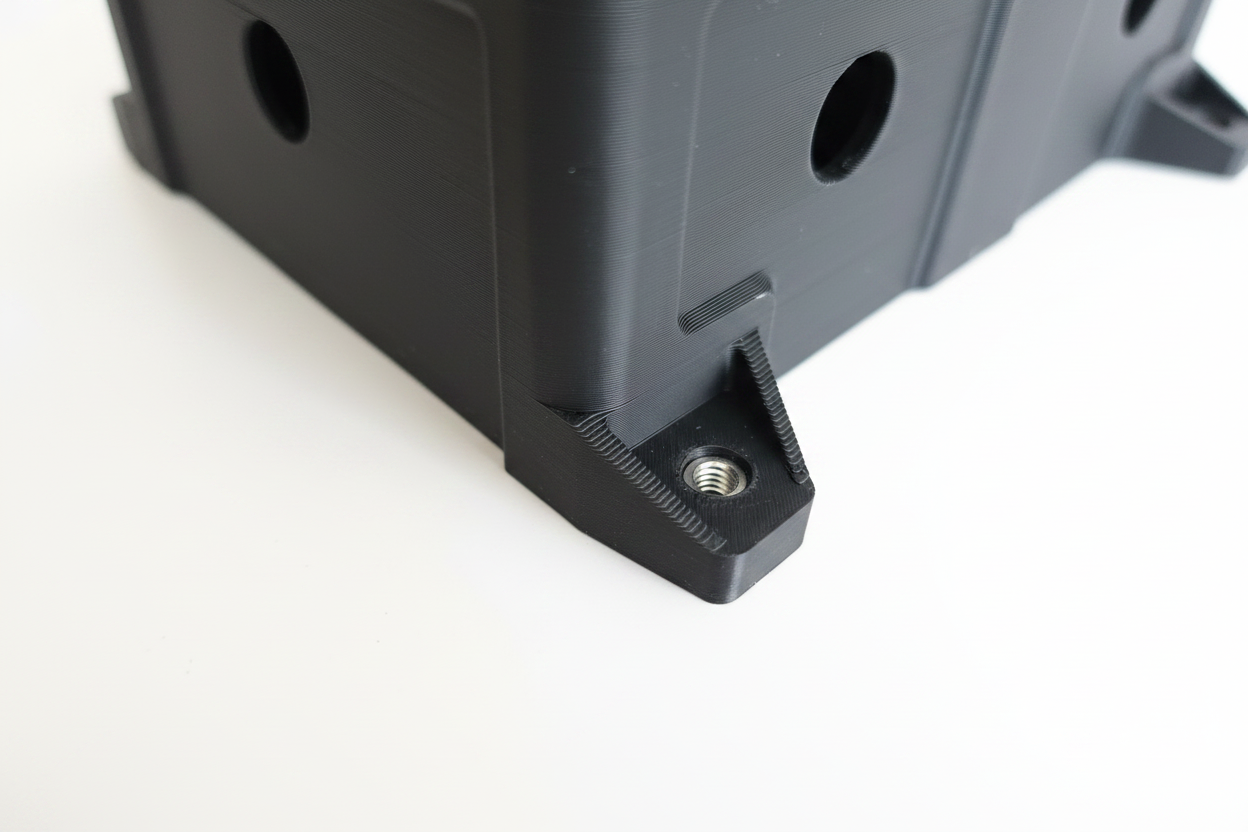
Electronics Enclosure — base assembly with brass heat-set inserts
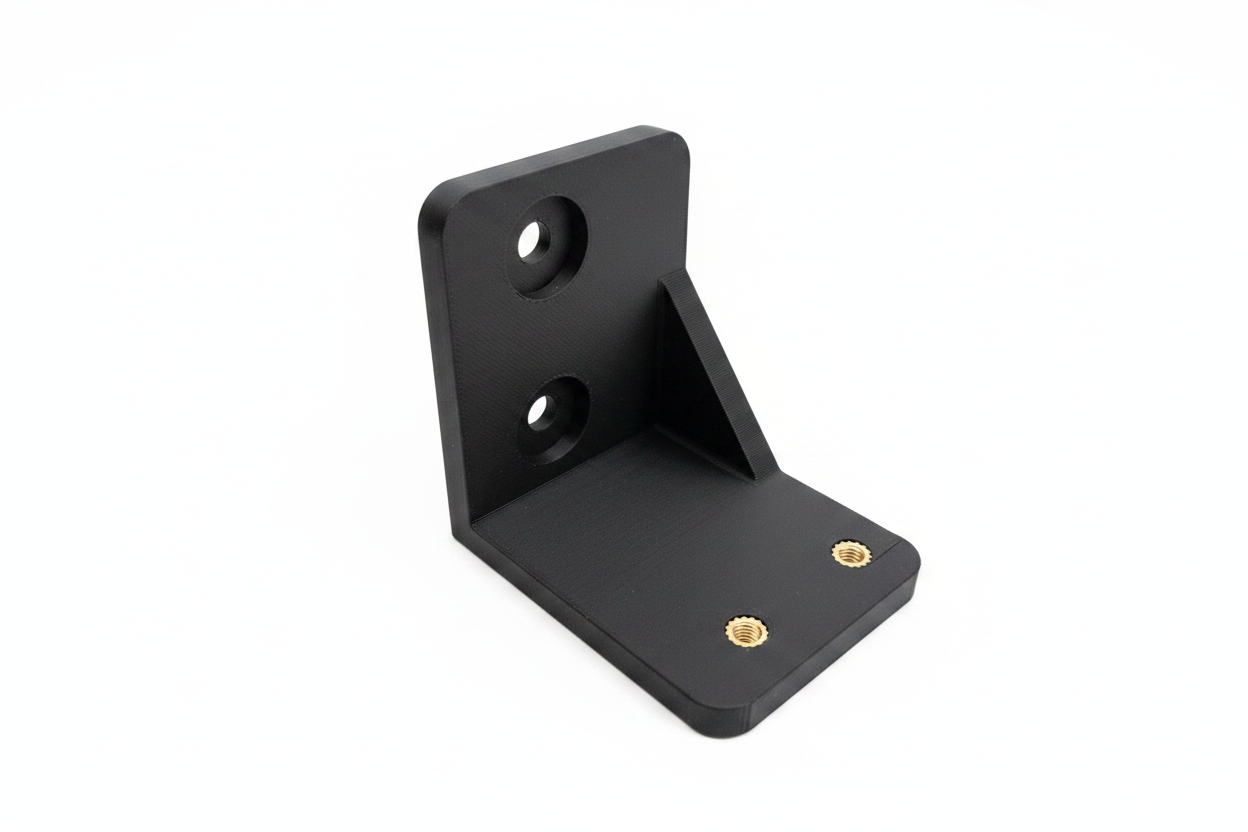
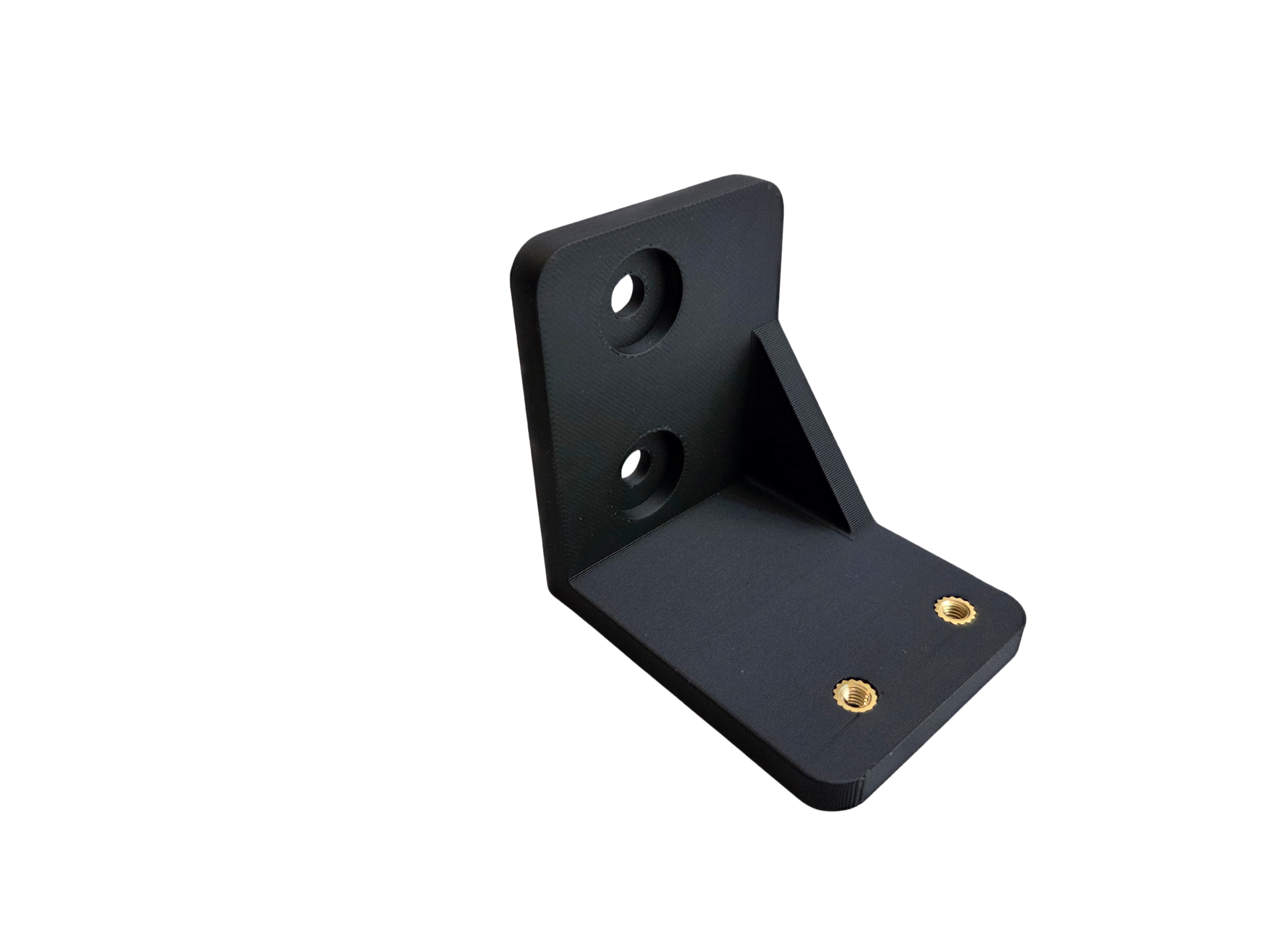
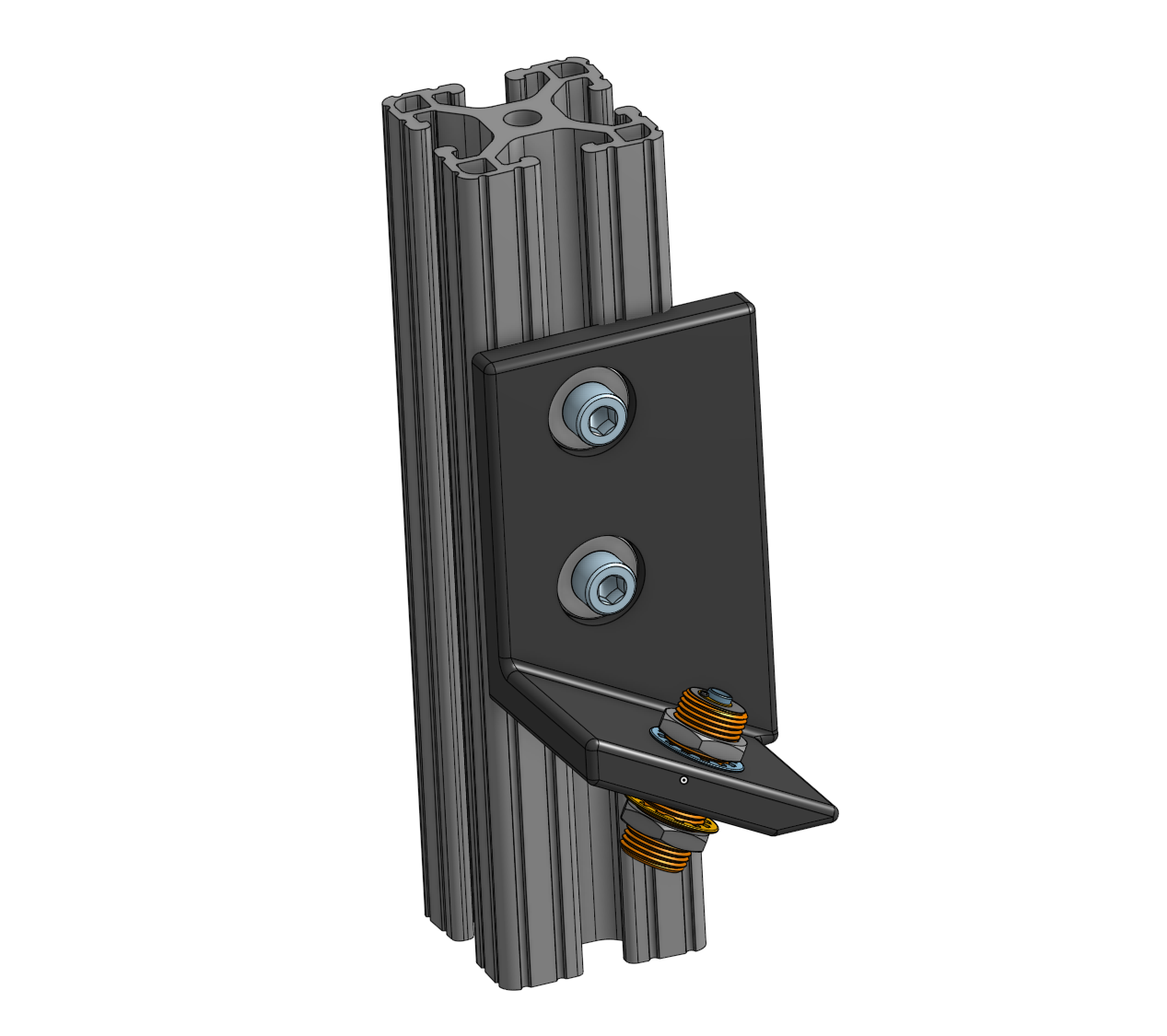
Structural L-Bracket — PA-CF with integrated mounting features
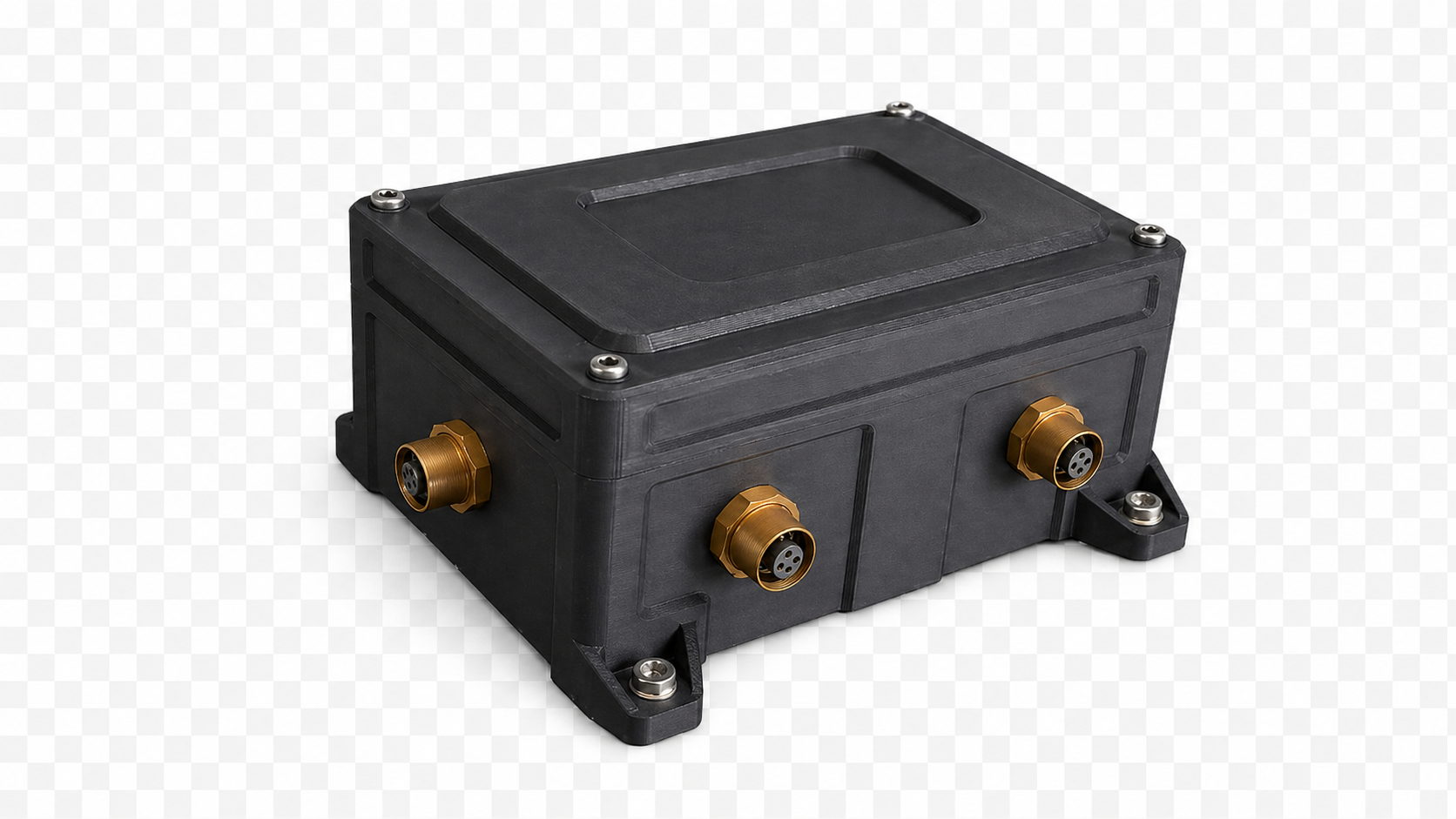
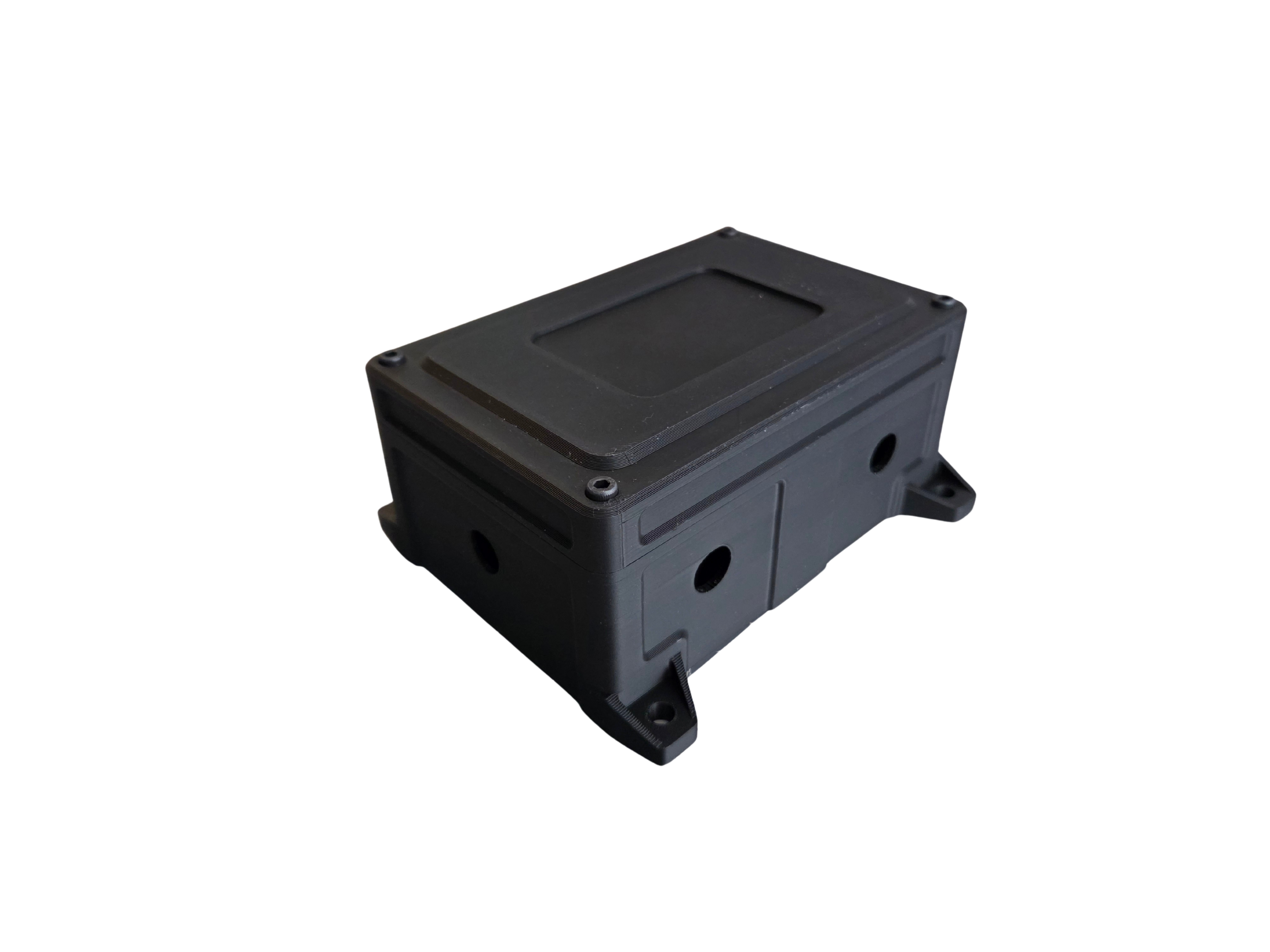
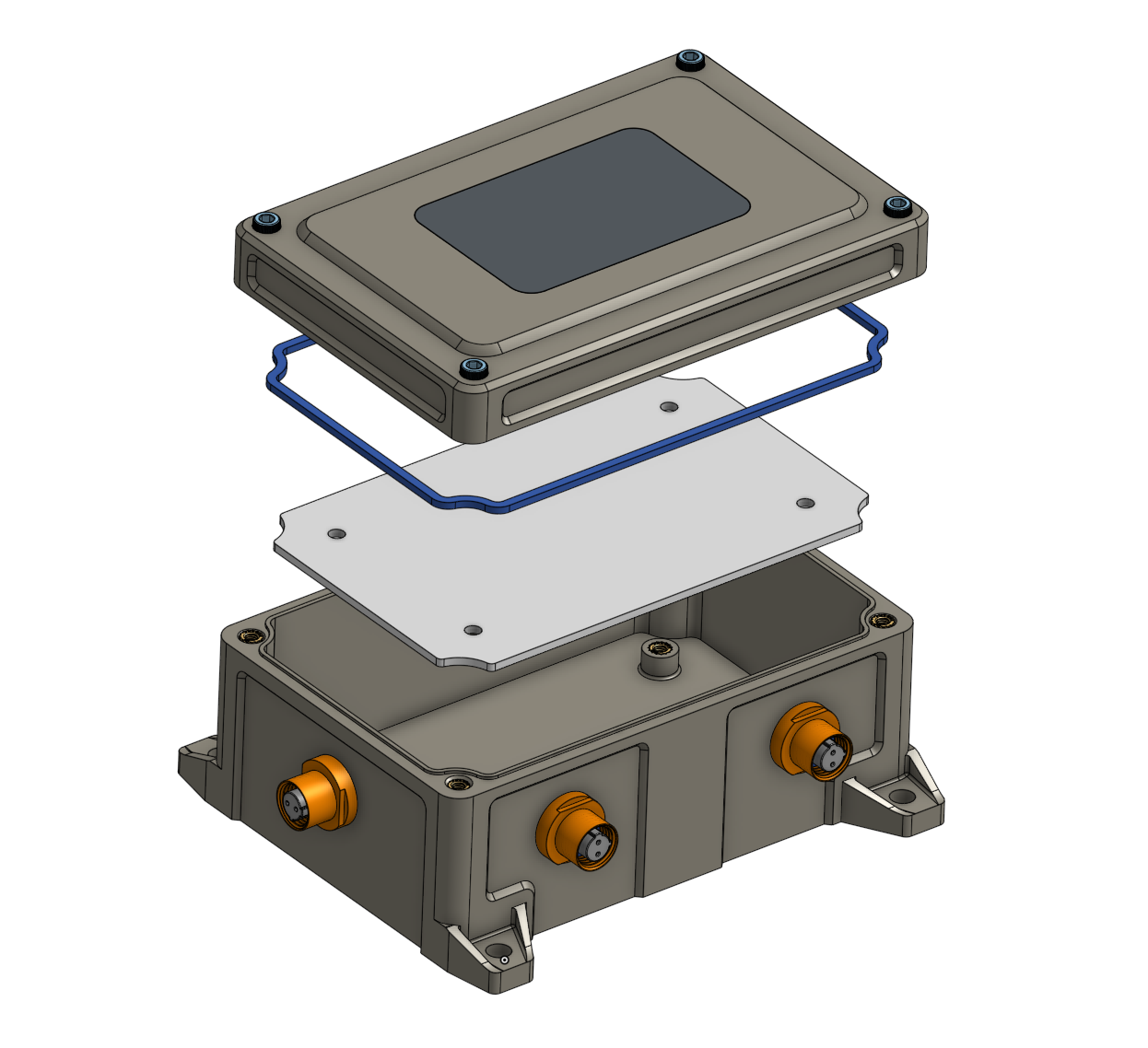
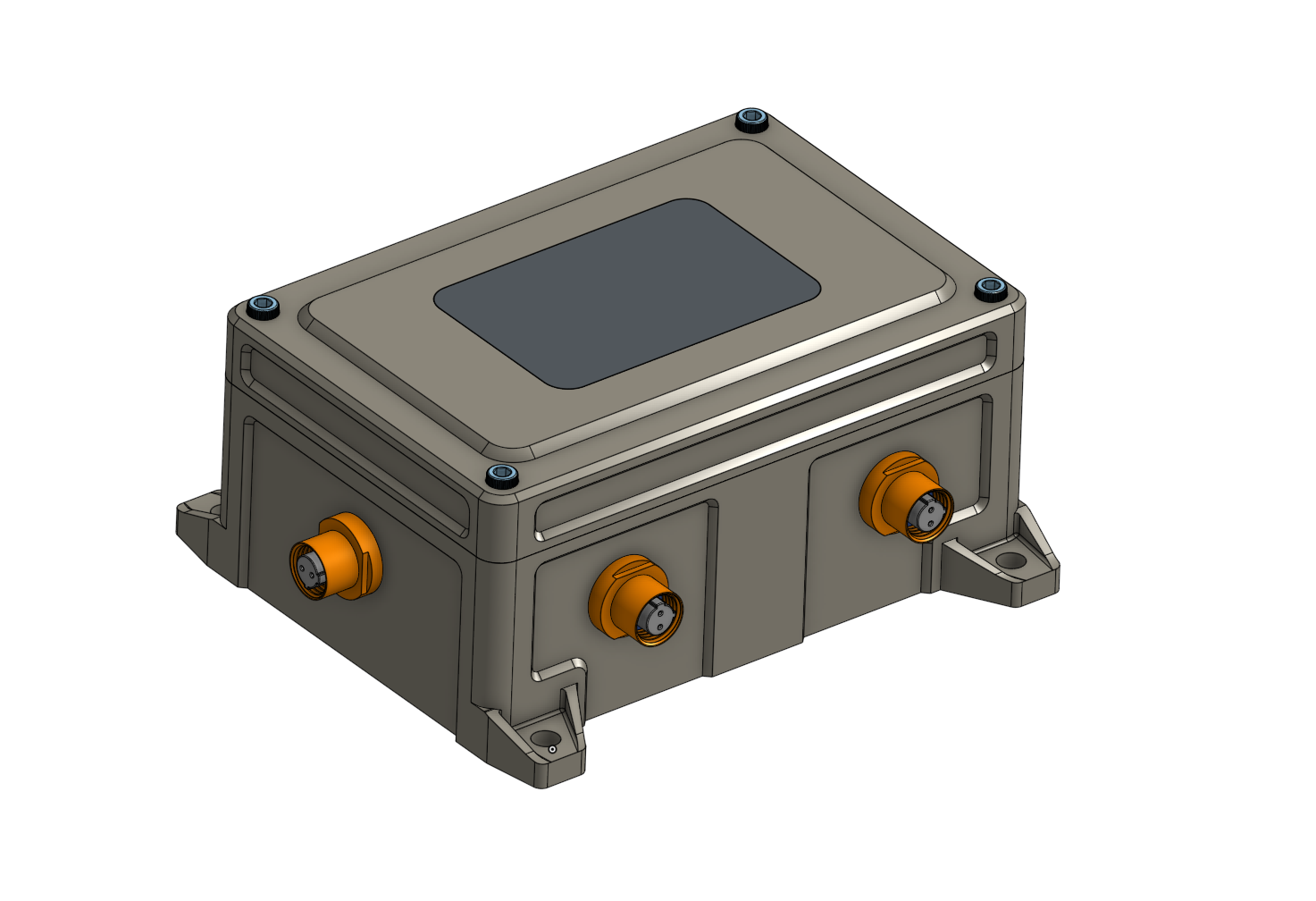
Multi-connector enclosure with mounting feet and cable management
Capabilities & Materials.
A plain-language guide to our process, the materials we work with, and what you can expect from every order.
What is 3D printing, and when does it make sense?
Additive manufacturing (3D printing) builds parts layer by layer from a digital file, depositing molten material precisely according to your design. Unlike CNC machining — which removes material from a block — additive processes can create complex internal geometry, undercuts, and hollow structures that would be impossible or costly to machine.
Modern industrial-grade FDM (Fused Deposition Modeling) printers, paired with engineering-grade materials, routinely produce parts that meet tight tolerances and withstand real-world mechanical loads, heat, and chemical exposure. This is not the same technology as a desktop hobbyist printer.
It's a good fit for: design validation, low-volume production where tooling costs aren't justified, custom or one-off parts, and legacy parts no longer commercially available. It's generally not the best choice for very high volumes (1000+ units), sub-±0.1mm precision, or applications requiring material certification (aerospace, medical implants). If you're unsure, ask — we'll tell you honestly.
Six engineering-grade materials.
Each material has distinct mechanical, thermal, and chemical properties. We'll recommend the right one for your application — or work with your existing specification.
PETG
ASA
Nylon PA-CF
PC-Blend
TPU
PLA-Pro
Inspection that matches your requirements.
We bring contract-manufacturing quality practices to additive manufacturing — because your parts should be held to a documented standard, not just approved by eye.
First Article Inspection (FAI)
The first part off a new job is measured against all critical dimensions and recorded in a formal report. Available on request for any order.
Material Traceability
Every material is logged by lot number at the start of each job. In the event of a batch issue, we can identify exactly which parts may be affected.
Calibrated Measurement
Dimensional checks are performed with calibrated calipers and digital gauges. Results are compared against your drawing, not estimated by feel.
Nonconformance Documentation
If a part falls outside of spec, it is documented — not quietly shipped. We tell you what happened and how we resolved it before delivery.
Technical capabilities at a glance.
Standard operating parameters. Edge cases and special requirements are welcome — just include them in your RFQ.
| Parameter | Specification |
|---|---|
| Build Volume | 350 × 320 × 325 mm (13.8 × 12.6 × 12.8 in); larger assemblies available via multi-part print |
| Dimensional Tolerance | ±0.2 mm (±0.008 in) or ±0.5%, whichever is greater (material and geometry dependent) |
| Layer Resolution | 0.10 – 0.30 mm (application and material dependent) |
| Minimum Feature Size | ~1.0 mm wall thickness (material and geometry dependent) |
| Accepted File Formats | STL, STEP (.stp / .step), OBJ, 3MF — STEP preferred for tight-tolerance work |
| Standard Lead Time | 5–10 business days from approved quote |
| Expedited Lead Time | 2–3 business days (surcharge applies; subject to availability) |
| Minimum Order | 1 unit |
| Volume Pricing | Tiered pricing from 10+ units; quote based on geometry and material |
| Quality Documentation | FAI report, material traceability, dimensional inspection — available on request |
| Post-Processing | Support removal, light sanding, thread tapping — specify requirements in RFQ |
Engineering discipline.
Applied to every print.
United States Marine Corps veteran with 17 years of engineering experience spanning mechanical design, project engineering, and systems integration — primarily supporting defense programs.
That breadth of experience — from hands-on design work to program-level problem solving — informs how Prometheus Print Works approaches every job.
Prometheus Print Works brings that same problem-solving discipline to additive manufacturing — with honest communication and documented work at every step.
I spent four years in the Marine Corps and another seventeen in engineering — most of it working on defense programs where the hardware has to work, the documentation has to be right, and there's no acceptable version of "close enough." That background shapes how I approach every job that comes through this shop.
The bulk of my career was in vehicle systems integration: designing and fabricating electronics enclosures, integrating complex systems into tight spaces, developing fixtures, and solving parts obsolescence problems when original components were no longer available. That last one — finding or making a functional replacement for something that no longer exists — is one of the things I genuinely enjoy, and it's a core part of what Prometheus offers.
"The name Prometheus comes from the Greek titan who stole fire from the gods and gave it to humanity — enabling warmth, metallurgy, craft, and civilization itself. He is, in the oldest sense, a patron of making. Every object we build carries some of that spirit: an idea translated into material reality, handed over to the person who needs it."
I started this business because additive manufacturing had matured into a genuinely capable production technology, but the discipline surrounding it often hadn't kept pace. Parts shipped without documentation. Tolerances stated loosely or not at all. Customers left to guess whether what arrived matched what they ordered. That's not how I was trained to work, and it's not how I run this shop.
Whether you're an engineer with a fully toleranced drawing or a small business owner describing a broken part from memory — you'll get the same careful attention and the same straight answers. If I see a problem with your design, I'll tell you before I start printing. If something doesn't meet spec, I'll tell you before I ship it.
If you have a project, reach out. We'll figure out the right approach together.
What you can count on from us.
Honest Quoting
We quote what we can actually deliver — tolerance, lead time, and material — and we flag upfront if your design has features likely to cause problems. No bait-and-switch, no surprises at delivery.
Documented Work
Every production job is traceable. We maintain records of the materials used, equipment settings, and inspection results. Documentation is available on request — not as an upsell.
Direct Accountability
If something goes wrong, we tell you. Nonconformances are documented, not ignored. We'd rather have an honest conversation upfront than ship a part that fails in your application.
Parts, Designs, & Process.
Printed parts, CAD models, and in-context applications — a look at the kind of work we do.
Request a Quote.
Fill out the form below and we'll respond within one business day with pricing and lead time. No commitment at this stage.
Request Received
Thank you for reaching out. We've received your quote request and will respond within one business day with pricing, lead time, and any clarifying questions.